Highlights
- Descend 48 steps into the Mikveh, which was walled up in 1492 and rediscovered 500 years later
- Explore three underground levels: crypt, air-raid shelter and Greek well
- Two Jewish ritual baths on a single route, admission included
- Walk through the Giudecca, where 5,000 Jews lived and 12 synagogues stood
- End at the Fountain of Arethusa, where the same spring water resurfaces
Description
The Jewish Quarter of Syracuse and the underground ritual baths of Ortigia
In 1492, the Alhambra Decree expelled Jews from all Spanish dominions, including Sicily. Before leaving, the Syracuse community did something that no one would discover for five hundred years: they walled up and camouflaged the entrance to their ritual bath, hoping to find it intact upon their return. They never returned. The mikveh remained sealed until, during the work to convert the building above it into a hotel, the long access staircase re-emerged – five truckloads of earth had to be removed to clear it.
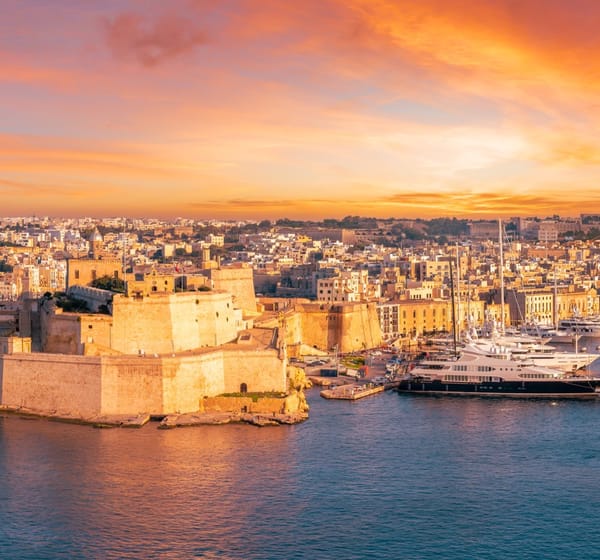
The neighborhood. Before the expulsion, the Giudecca had at least five thousand people and twelve synagogues. It developed in the eastern part of Ortigia, symbolically facing Jerusalem, in a labyrinth of cobbled alleyways. As you walk, the guide reconstructs the geography of the community: where the courtyard, the hospital and the gathering places were located, and how this neighborhood intertwined with the Christian city. In Syracuse, unlike the compulsory ghettos of northern Italy, coexistence was a choice and not an obligation.
Traces on the surface. The Church of San Giovannello, along Via della Giudecca, stands on the site of the former main synagogue. Fragmentary inscriptions in Hebrew have been found on two stone blocks: the first mentions the synagogue of Syracuse, while a second, unearthed during the restoration of Palazzo Bianca, documents the donation of the land on which to build it.
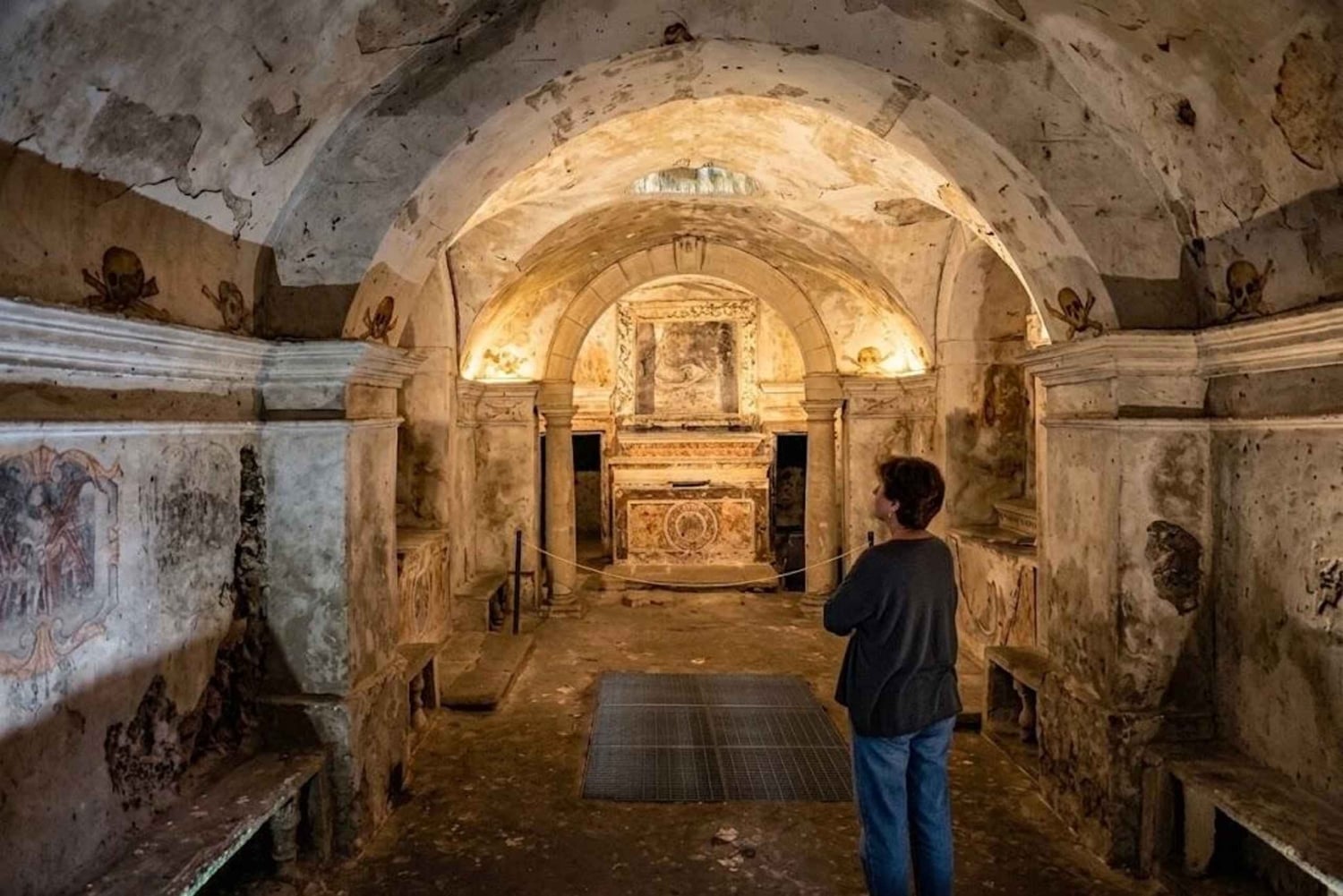
The hypogeum of San Filippo. Beneath the 18th-century church, you descend three levels. The first is the crypt with 18th-century frescoes. The second is an underground network dug by the Greeks, which connected the sacred and institutional sites of ancient Ortigia and was transformed into an air-raid shelter during World War II. The third level, at eighteen meters, is a Greek well fed by spring water, used as a ritual bath for women's ablutions. The site has attracted the attention of Israeli archaeologists, who have come here to study it.
The Miqveh.
Forty-eight steps carved into the limestone rock lead to a square room with a vaulted ceiling supported by four pillars, eighteen meters below street level. In the center are three pools surrounded by stone benches, still fed by the spring aquifer. Around them are vestibules formed by arches carved into the rock and other pools in niches, one of which was created from an ancient Greek aqueduct. It is considered one of the very few European ritual baths to have retained its structure in its entirety. The visit inside is accompanied by site staff.
The route above ground is about one and a half kilometers long and flat. Access to the two underground sites is via steep stairs and narrow passages: agility and non-slip shoes are required, and they are not suitable for those with mobility issues. Photography is not permitted inside the Mikveh.
Includes
Certified local guide
Admission to the Hypogeum of San Filippo with accompaniment by the site's volunteers
Admission to the Miqwe with accompaniment by site staff
Excludes
Food and refreshments
Gratuities
Transportation to and from the meeting point
Photographs inside the Miqveh (not permitted by the site)
Important Information
- Comfortable, non-slip shoes · Two underground descents with steep stairs and narrow passages; good agility is required · Not suitable for those with mobility issues · Photography is prohibited inside the Mikveh · Cool temperature in the underground areas, even in summer
Easy cancellation
Cancel up to 24 hours in advance for a full refund